
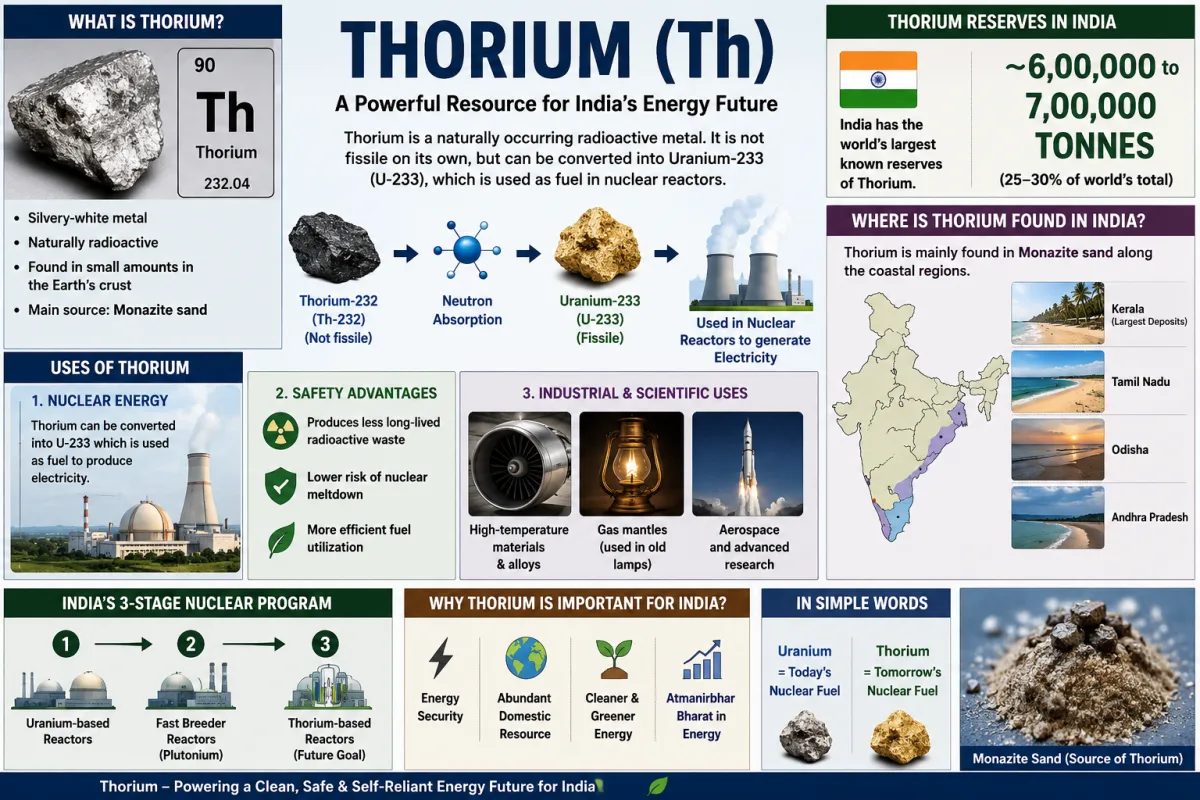
What is Thorium?
Thorium is a naturally occurring radioactive metal with the chemical symbol Th and atomic number 90. It is found in small quantities in the Earth’s crust, primarily in minerals such as monazite sand.
- It is silvery-white in appearance
- It is not directly fissile, meaning it cannot sustain a nuclear chain reaction on its own
- However, it is a fertile material, which means it can be converted into Uranium-233 (U-233)—a useful fuel for nuclear reactors
Thorium Resources in India
India is among the top countries in the world in terms of thorium reserves.
- Estimated reserves: ~600,000 to 700,000 tonnes
- Share of global reserves: Around 25–30%
These large reserves make thorium an important resource for India’s future energy needs.
Where is Thorium Found in India?
In India, thorium is mainly found in coastal sands, especially in monazite deposits.
Major locations include:
- Kerala (largest deposits)
- Tamil Nadu
- Odisha
- Andhra Pradesh
Uses of Thorium
1. Nuclear Energy (Primary Use)
- Thorium can be converted into Uranium-233, which is used as fuel in nuclear reactors
- It is considered a cleaner and safer alternative to conventional uranium
2. Safety Advantages
- Produces less long-lived radioactive waste
- Has a lower risk of nuclear meltdown compared to traditional reactors
- Offers better fuel efficiency
3. Industrial and Scientific Uses
- Used in high-temperature ceramics and alloys
- Previously used in gas mantles for lighting
- Applied in research for advanced reactors and aerospace materials
India’s Thorium Program
India follows a three-stage nuclear power program:
- Uranium-based reactors
- Fast breeder reactors (Plutonium-based)
- Thorium-based reactors (future goal)
India is actively working on thorium technology to utilize its vast reserves and achieve long-term energy security.
In Simple Words
- Uranium = Present nuclear fuel
- Thorium = Future nuclear fuel (safer and more abundant in India)